
So you’ve flushed the toilet, but as you were going to wash your hands (hopefully your mom raised you right!), you notice something odd with the old commode.
You lift the toilet lid, and that's when you see it ... The toilet tank is not filling back up as usual.
A common issue we receive regular local plumbing repair calls for is people telling us that their toilet's tank is slow to refill with water, or the toilet tank is not filling with water at all.
Temporary Solution for Toilet Flushing
If you find yourself in a situation where the toilet isn’t flushing, a simple, temporary solution is to manually fill the toilet tank with water using a bucket.
Once the tank is filled, the toilet will function as usual, allowing you to flush without issue until permanent repairs are made.
Need Help with Your Toilet Repair? Don't wait for the issue to get worse! Contact ARS/Rescue Rooter today at (866) 399-2885 to get your toilet running like new.
Common Reasons Why Your Toilet Tank Isn’t Filling
and How to Fix It
Every time you flush, the toilet tanks are supposed to refill with water. The water level should be about a half inch below the overflow tube, and take around 10 seconds to refill. When a toilet is not filling up with water, it is a sign of an issue that may be a simple weekend project fix or require a certified plumber's assistance.
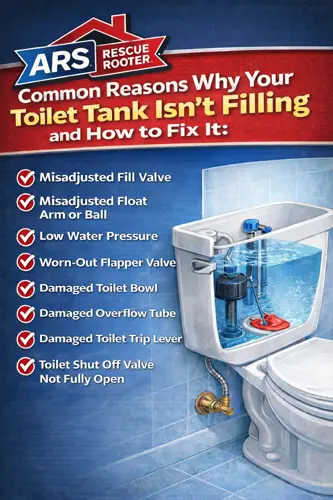
Misadjusted Fill Valve
The most common reason for a toilet tank not filling is a faulty fill valve. To begin, inspect it to see whether anything is trapped inside the tube and whether the tube itself isn’t damaged. Debris or silt can clog fill valves over time, and will prevent the toilet from filling properly and shut off. This results in excessive water flow, toilet tank overflow, or continued running of the toilet water.
If your toilet's fill valve has a screw on top, turn it with a flat-head screwdriver. Turning the adjustment screw clockwise allows more water to enter. In the other direction, turning the filling valve screw counterclockwise limits water flow into the toilet.
If your tank uses adjusted cylinders, remove the toilet cap lid and find the fill valve that is located to the left side of the tank. There may also be a clip on the side of the fill valve rather than a screw on top. Pinch the float clip on the side of the float valve and slide it up to let in more water.
Misadjusted Float Arm or Ball
The toilet float ball and arm technique is still utilized in many toilets today. Your toilet may not fill if either of these parts are faulty.
The float ball and arm is connected directly to the toilet fill valve and controls water flow into the toilet tank from the toilet bowl after it has been flushed. If this part is worn out or adjusted incorrectly, it will either allow too much water to flow into the toilet tank (leading to overflowing) or too little water (leading to a toilet tank that never fills).
Adjusting the toilet ball float and arm is required to allow more water into the tank. To raise the ball to the desired height, simply bend the arm slightly upward. You may need to fiddle with it a bit to get it right so water fills properly.Some float arms also feature a screw adjustment, which you can use if necessary.
If the arm is broken, it will need to be replaced. Fortunately, there are inexpensive kits available at any local hardware store you can install yourself.
Low Water Pressure
One of the most common things to check if your tank isn't filling properly is water pressure. If there is not enough water pressure getting to the toilet tank, it will shut off before filling completely.
Turn on the faucet in your bathroom sink. If no water is running in your house, then it's likely a problem with the main line. Make sure you're getting municipal water from your home or business. If water isn't reaching your bathroom but is entering the property, the low water pressure is most likely due to a blockage or leak in your interior plumbing system.
It might also indicate that your water pump is failing, especially if it is happening to many tenants in a single building. If you have a tall structure, you may notice that the higher levels have reduced water pressure.
You can also check your toilet manufacturer's rating on water pressure (usually stamped somewhere on the toilet tank), and then compare that rating to your home's water pressure. If the toilet requires greater water pressure than is available, you will need to call a plumber or your local water company to address this issue before anything else can be done.
Worn-Out Flapper Valve
The toilet flapper valve is a rubber valve located at the bottom of your toilet tank. Its purpose is to prevent the tank water from emptying into the toilet when it isn't being used. If there's a small lift chain keeping it in place, make sure the chain isn't caught beneath the valve, which would cause it to not seal properly. The chain occasionally has to be shortened.
In other situations, a leaking flapper valve may simply be old and worn out. Metal flappers were previously used on older toilet versions and are prone to corrosion with time, preventing them from sealing correctly against the valve seat when turned off.
Silicone rubber is now used to form a water-tight seal on toilets. The flapper valve gasket, if it has become worn or hardened, must be replaced.
A handy person can perform this task, or any local plumber can do it for you, depending on your level of comfort.
Damaged Toilet Bowl
Another possibility as to why the toilet bowl is not filling with water is that your toilet bowl itself may be damaged in some way. A cracked toilet bowl with a slow leak can keep your toilet from filling. If the crack is on the back of the bowl out of sight, it may go unnoticed, although you'll typically see water on the floor.
If there’s a crack in your bowl, shut off the water supply to your toilet using the valve under the toilet or the valve that feeds water to your bathroom. Don’t allow any more water into your toilet and avoid using it! It may collapse and flood your bathroom with water, among other possibilities. If there is a room or tenant beneath the bathroom, this area could be damaged as well.
You'll want to call a professional plumber right away to determine if your existing toilet can be repaired or if you'll need a new toilet installation service.
Damaged Overflow Tube
The overflow tube is a large tube that transports excess water in the toilet tank to the toilet bowl, to prevent overflowing. It's in the center of the toilet tank and is effectively a component of the flush valve.
If you have a cracked overflow tube, toilet water will either continue to fill up past the normal level (leading to an overflowing toilet) or toilet bowl water will not get drained into the toilet drain hole at all (again leading to overflowing).
Fortunately, you can take care of this yourself with replacement parts. Simply remove the overflow tube and insert the new one. You should make sure that the new tube is the same size as the old one. Alternatively, you may simply replace the whole flush valve mechanism.
Damaged Toilet Trip Lever
The toilet trip lever assembly is an important component of the toilet's filling cycle. The flush handle's trip assembly is the portion that connects to the tank.
This assembly might be positioned incorrectly, causing the flush cycle not to finish correctly.
It's possible that this part will cease signaling to the toilet, telling it to fill with water immediately. There will still be water in the toilet holding tank, which will continue running into your toilet bowl.
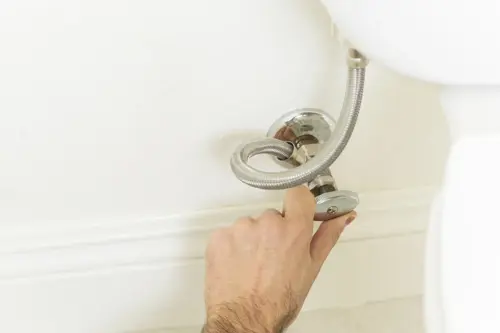
Toilet Shut Off Valve Not Fully Open
Finally, the most common cause of a toilet tank not filling is your home's water supply itself.
Typically, there is a shut-off valve located somewhere near the toilet that controls whether or not the toilet gets water from the main water supply line. This valve can become misadjusted over time so that it does not fully open when activated by the handle on the toilet itself.
When this problem occurs, toilets stop getting water, which leads to the toilet bowl water not filling up. If this happens, your toilet tank will not fill up past the level of the toilet bowl until you manually open the shut-off valve or water is restored to full pressure. At that point, toilet water will refill the toilet tank as it normally would.
Toilet Tank Still Not Filling Up? Call ARS/Rescue
Rooter
A toilet's components should be replaced sooner rather than later. They might fail if left ignored. Even if the toilet parts do not completely break down, malfunctioning fittings use water and raise your water utility costs.
If your toilet tank still won't fill completely, you'll need a professional plumber from ARS/Rescue Rooter. This indicates that something is wrong in your pipes deeper than the toilet itself, which is why you should hire a professional. With ARS/Rescue Rooter, you can take advantage of affordable financing options and our 100% satisfactiion guarantee.
Call our plumbers at 866-399-2885 or find your nearest ARS/Rescue Rooter location to schedule service on your toilet today!


