
Your HVAC system rarely quits at a convenient time. It’s usually during the hottest week of summer or the first real cold snap of winter that problems show up—right when you need heating or cooling the most. When that happens, many homeowners start weighing repair vs. replace HVAC system decisions.
An old HVAC system may still run, but rising repair costs and declining efficiency often signal bigger issues ahead. If you’ve wondered, “Should I repair or replace my HVAC system?”, this guide from ARS/Rescue Rooter explains how to evaluate your system, avoid costly surprises, and make the right decision for your home.
Why Age Matters When Evaluating Your HVAC System
Age is one of the biggest factors when weighing repair vs. replace HVAC decisions. As systems age, efficiency declines, parts wear down, and breakdowns become more common. Many homeowners notice these patterns alongside other HVAC problems in older homes, which can signal that a system is nearing the end of its reliable lifespan.
What’s Considered an Old HVAC System?
HVAC systems don’t last forever. In many homes, an old HVAC system is simply one that has reached the point where wear, declining efficiency, and more frequent repairs become apparent. Here are a few things you should know.
How to Tell How Old Your HVAC Is
Not sure how to tell how old an HVAC is? You can usually tell by looking at:
Manufacturer label or data plate: Found on the outdoor unit or furnace cabinet; the serial number often contains the manufacturer date.
Service stickers: HVAC technicians frequently leave installation or maintenance dates on the equipment.
Home inspection or purchase paperwork: These documents sometimes list the year of installation.
Building permits or contractor invoices: Replacement systems often require permits that include installation details.
A professional inspection: An HVAC technician can typically identify the manufacturer date and overall condition during a service visit.
How Old Is Too Old for HVAC?
As a general rule, air conditioners and furnaces are typically recommended for replacement after about 8-10 years, while heat pumps often last 8 years, depending on maintenance and usage. Furthermore, Energy Star’s official guidelines recommend replacing heat pumps and air conditioners after 10 years and furnaces after 15 years.
Around this age, parts begin to wear down, and reliability can drop quickly, especially if the system has seen heavy seasonal use or infrequent maintenance, one of the most common HVAC mistakes.
Will a Home Warranty Cover an Old HVAC?
Wondering, “Will a home warranty cover an old HVAC?” It usually depends on the policy and the system’s history and condition. Some warranty plans include HVAC coverage, but they often have stipulations, such as excluding claims due to lack of maintenance or requiring inspection records. We recommend reviewing your contract for coverage caps and exclusions or reaching out to your insurer for clarification.
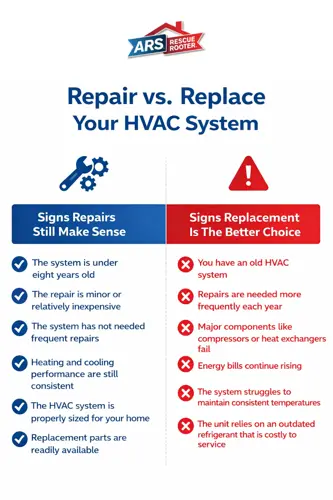
How to Decide to Repair or Replace an HVAC
So, is it worth replacing an old HVAC system? Here’s when repairs still make sense or when replacement may be the better option.
Signs Repairs Still Make Sense
Not every issue requires a replacement. In many situations, repairing the system is still the practical option. Repairs may make sense when:
The system is under eight years old
The repair is minor or relatively inexpensive
The system has not needed frequent repairs
Heating and cooling performance are still consistent
The HVAC system is properly sized for your home
Replacement parts are readily available
Signs Replacement Is the Better Choice
At a certain point, repairs stop being the cost-effective option. When problems keep returning, it’s often a sign that the system is reaching the end of its useful life. Replacement may be the better choice when:
You have an old HVAC system
Repairs are needed more frequently each year
Major components like compressors or heat exchangers fail
Energy bills continue rising
The system struggles to maintain consistent temperatures
The unit relies on an outdated refrigerant that is costly to service
The Cost of Waiting: When Repairs Become a Money Pit
Delaying replacement can seem cheaper in the short term. But when an old HVAC unit begins breaking down more often, those repairs can quickly add up. Over time, the true repair vs. replace HVAC decision often becomes clear as ongoing costs start to stack up.
Hidden Costs of Keeping an Old HVAC Unit
Keeping aging equipment running can lead to several hidden expenses, including:
Frequent repair visits that add up over time
Higher energy bills as efficiency declines
Emergency service calls during extreme weather
Inconsistent temperatures throughout the home
Unexpected system failure that forces a rushed replacement
Benefits of Replacing Before a Breakdown
Planning a replacement before a system fails gives homeowners more control over the timing and cost. Instead of reacting to an emergency, you can evaluate options and choose the right solution for your home. Replacing an old HVAC system before a breakdown can provide:
More reliable heating and cooling
Potentially lower monthly energy costs
Improved comfort and airflow
Better humidity control
Time to compare equipment options and pricing, including options like heat pumps or ductless mini-split systems
How Efficiency Improvements Can Reduce Long-Term Costs
Efficiency is typically measured using ratings such as SEER for air conditioners and heat pumps and AFUE for furnaces and boilers. When evaluating repair vs. replace HVAC decisions, efficiency is one of the biggest financial factors.
Did you know that HVAC systems typically account for 40-60% of a building's energy use? And older systems often use far more energy than modern equipment. In fact, all air conditioning systems and heat pumps manufactured after 2015 must meet new efficiency standards, helping lower utility bills for households nationwide. The Department of Energy released new regulations for air conditioning systems in 2023 to further address minimum efficiency ratings.
The bottom line? Newer systems are designed to deliver the same heating and cooling while using significantly less energy. Many older systems operate at much lower efficiency than today’s equipment, meaning they require more energy to maintain the same indoor temperatures.
Replacing an old HVAC unit with a higher-efficiency model can provide several long-term benefits, including:
Potentially lower heating and cooling bills due to improved energy performance
More consistent indoor temperatures throughout the home
Better humidity control
Reduced strain on system components, which can improve reliability
Quieter operation compared to many older systems
Access to newer system options
Improved thermostat control and system responsiveness
Ways to Save When Replacing an Old HVAC System
Replacing an old HVAC system doesn’t always mean paying the full cost upfront. Many homeowners reduce replacement costs through available incentives, financing programs, and seasonal promotions. Ways you may be able to save on HVAC replacement costs include:
Federal energy efficiency tax credits for qualifying high-efficiency HVAC equipment
Utility company rebates offered by many local energy providers
Manufacturer rebates tied to specific systems or seasonal promotions
Seasonal specials and promotions offered by ARS/Rescue Rooter
Financing options that allow homeowners to spread replacement costs over manageable monthly payments
Potentially lower monthly energy bills thanks to improved system efficiency
Reduced repair costs that often come with maintaining an aging system
When combined, these savings can help offset the upfront cost and make upgrading from an older system more affordable. An ARS/Rescue Rooter technician can help you identify which manufacturer or Home Energy Rebates, federal tax credits, and promotions may apply to your system upgrade. We’ll walk you through available savings opportunities so you can make a more informed decision about your replacement.
Repair vs. Replace Your HVAC: Making the Best Decision for Your Home
Deciding to repair vs. replace your HVAC equipment isn’t always simple, but age, repair frequency, and rising energy costs can make the choice clearer. When an old HVAC system requires frequent repairs or struggles to keep your home comfortable, a replacement may offer better reliability and long-term value.
The team at ARS/Rescue Rooter can inspect your system, explain your options, and help you determine the right solution for your home. Every service we provide is backed by our Exceptional Service Guarantee, so you know the job will be done right.
Call 866-399-2885 or schedule service online for one of our HVAC professionals to evaluate your system today.


